Getting to Know Los Angeles
Los Angeles is not one city but a county of them. Eighty-eight incorporated cities and dozens of unincorporated communities sit across roughly 4,000 square miles. The streets, the parking rules, and the housing stock change from one region to the next. Sometimes they change within a few blocks. Below is how the parts of the county actually tend to move, drawn from the jobs our crews run week in and week out.
Downtown, the Arts District, and Koreatown
The towers along Figueroa and Grand, the lofts of the Arts District, and the mid-rises of Koreatown all run on building logistics. That means a reserved freight elevator, a booked dock window, and a certificate of insurance on file before the truck arrives. We handle that paperwork up front and schedule around each building’s move hours. In practice that means an early start, ahead of both the freeway traffic and the building’s cut-off time. Downtown is also where most of the office moving work happens. Those jobs are often staged overnight or across a weekend.
Beverly Hills, Bel Air, and the Westside Estates
Beverly Hills, Bel Air, Holmby Hills, and Hancock Park hold some of the most valuable addresses in the country. They are also some of the most demanding to move. Gated motor courts, formal entries, and long interior carries all call for extra floor and wall protection. The driveway usually decides the truck size. This is the work white-glove moving was built for. Art, antiques, and grand pianos are common here, which is why a piano crew is often booked onto the same job.
Santa Monica, Venice, and Marina del Rey
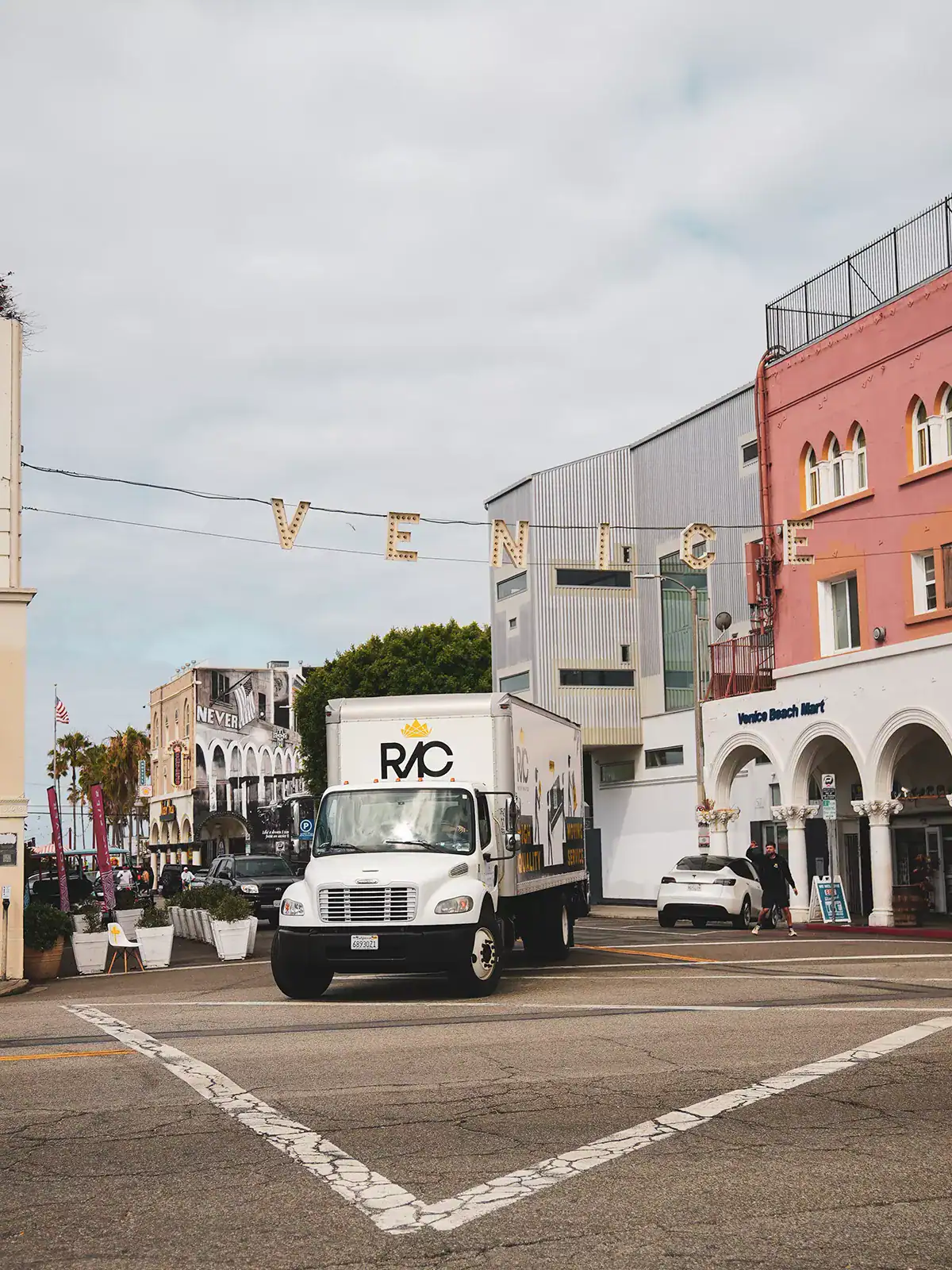
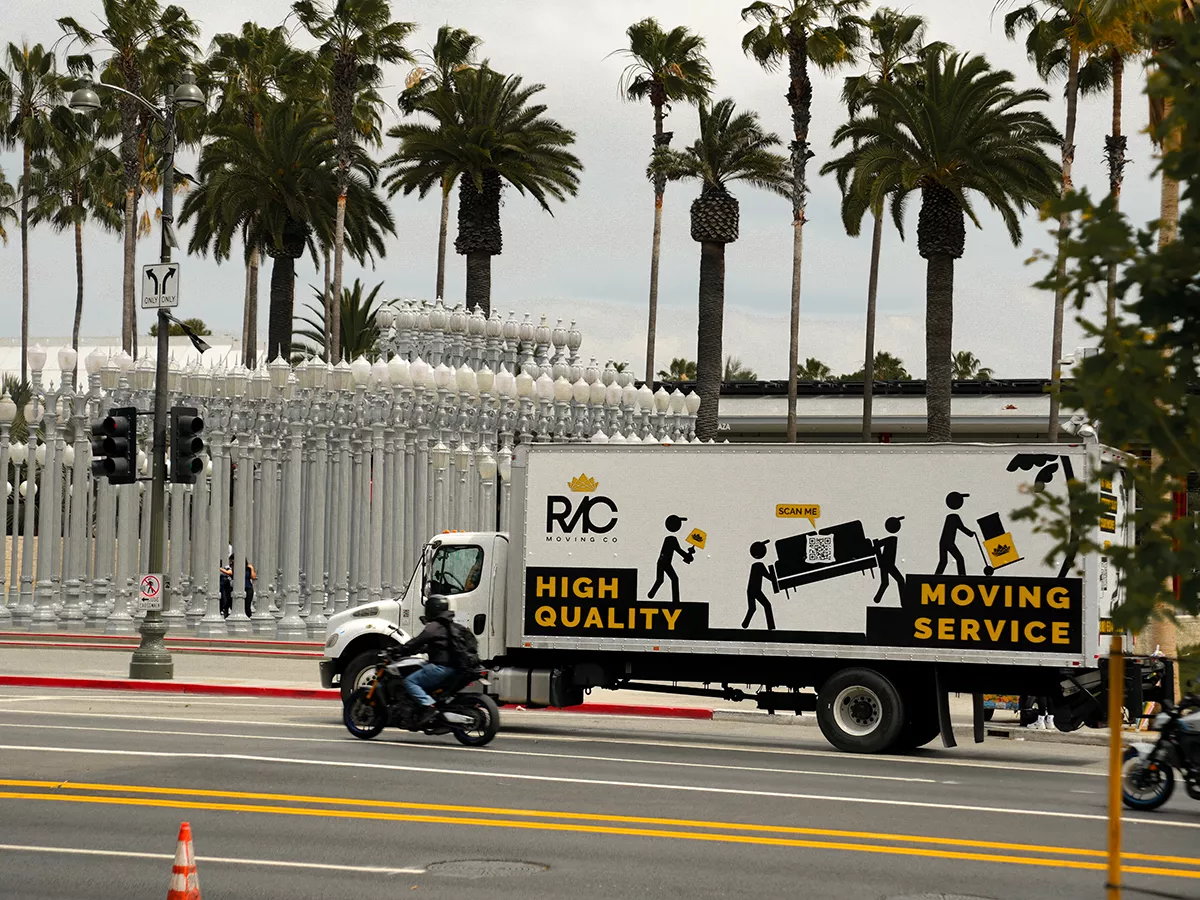
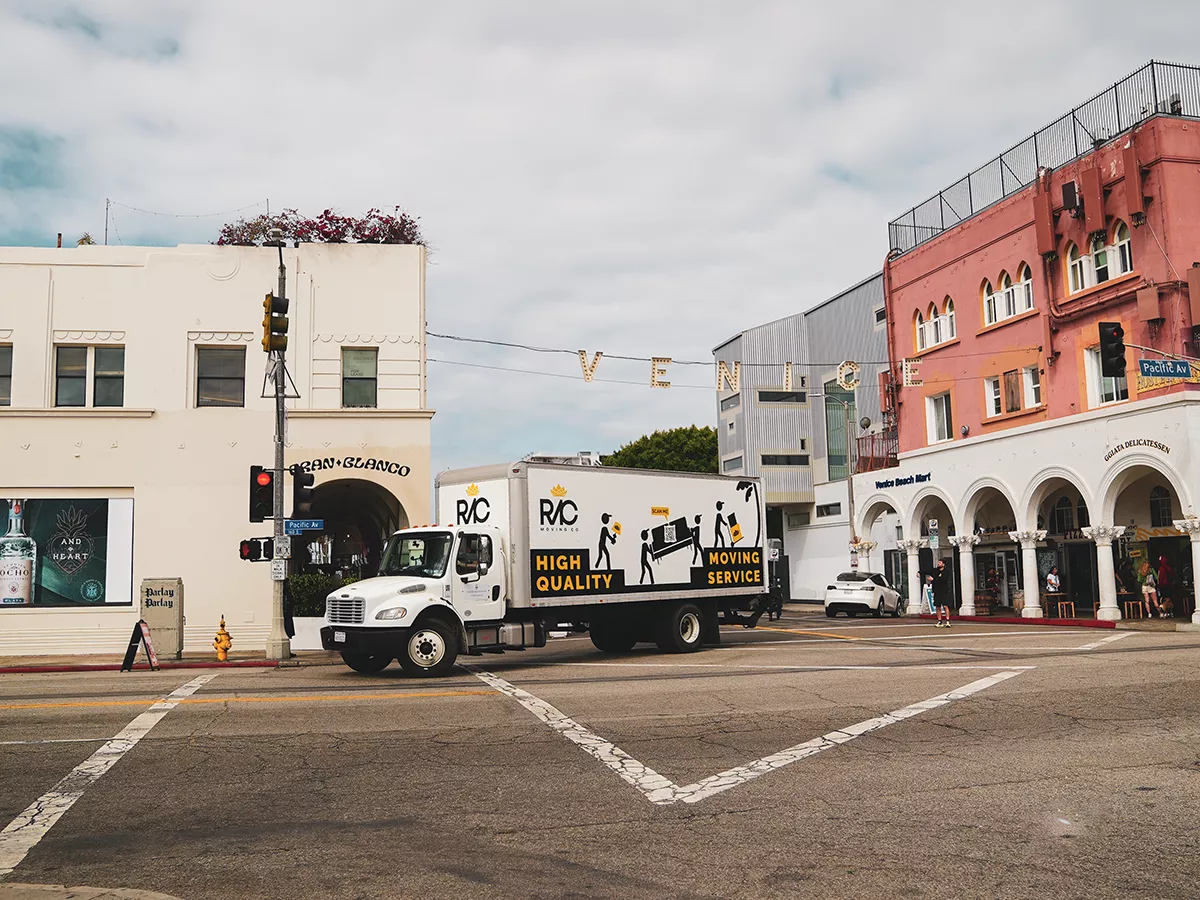
The coast runs on a different set of problems. Santa Monica sets its own parking rules and issues its own permits. Curb space there is reserved through the city, not through LADOT. Venice adds narrow walk streets and canal-side homes where a full-size truck cannot always get close. Marina del Rey is mostly large apartment and condo complexes with gated garages and shared elevators. Those buildings are steady work for the apartment moving crews. The tech and entertainment offices along the coast keep the corporate relocation side busy in the same neighborhoods.
Hollywood, Los Feliz, and the Hills
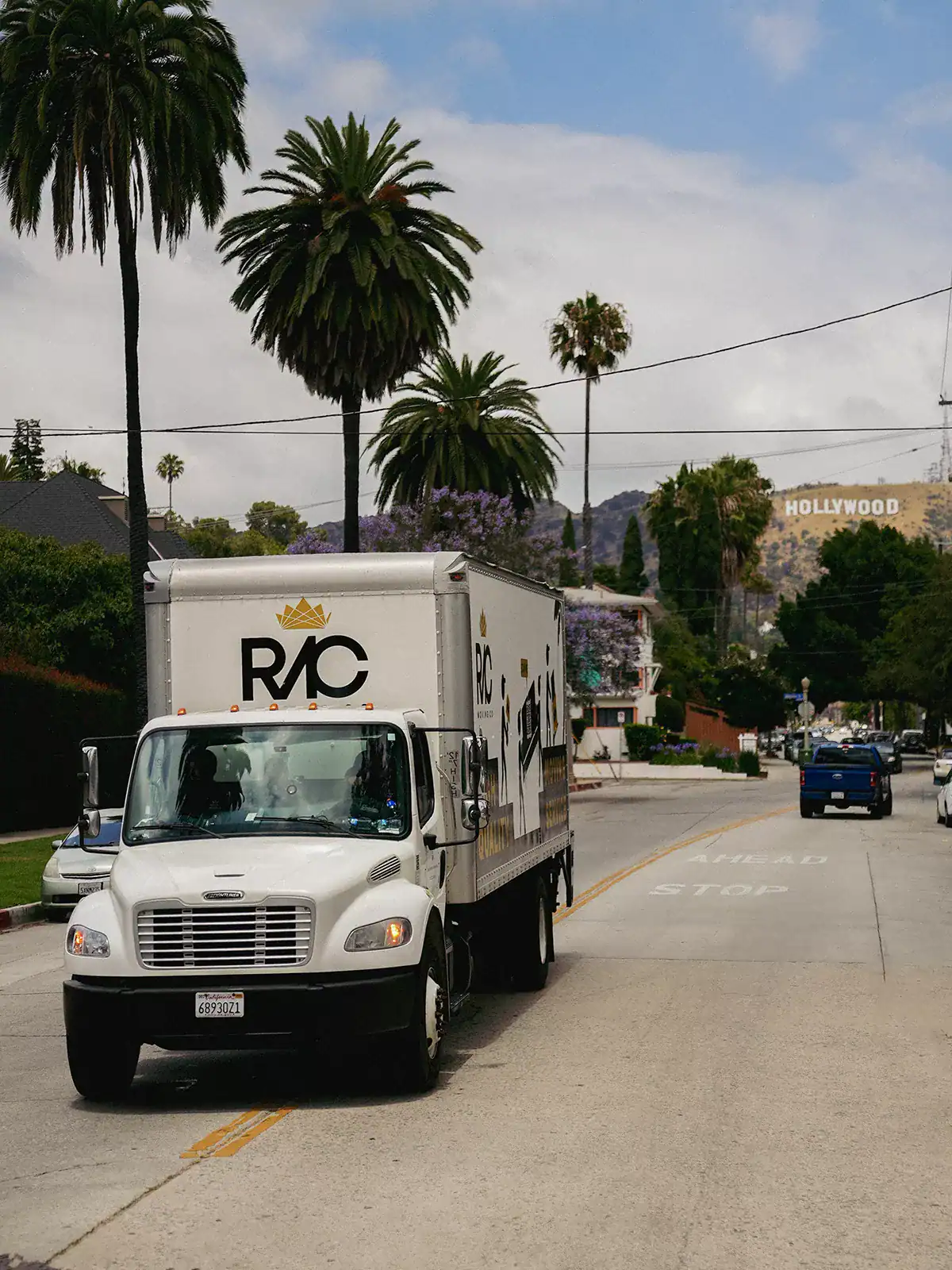
North of Sunset the grid breaks up fast. Los Feliz, Beachwood Canyon, and the Hollywood Hills bring steep, narrow streets, blind curves, and driveways that drop away from the road. Some blocks will not take a full-size truck. On those we bring a smaller shuttle vehicle and run the load in stages. Older buildings along Franklin and Hollywood Boulevard are usually walk-ups with no dock, so stair carrying is routine. Booking full-service moving covers the packing and the carry, so nothing on those stairs is left to chance.
The San Fernando Valley
Over the hills, the Valley is flatter and easier to work. Sherman Oaks, Studio City, Van Nuys, Northridge, and Woodland Hills mix garden apartment complexes with single-family tracts and generous driveways. Parking is rarely the problem here. Heat and distance are. Summer afternoons in the west Valley get punishing, so we start early and plan the route around the 101 and the 405. Many Valley moves are families sizing up or down, and the residential moving crews handle the full range. When closing dates do not line up, storage covers the gap.
The San Gabriel Valley and the Gateway Cities
East and southeast of downtown, the county settles into older, mostly flat communities. Pasadena, San Marino, and Alhambra hold Craftsman bungalows and historic estates. The original floors in those homes are worth protecting. Pasadena also runs its own permit system for curb space. Farther south, Downey, Norwalk, Montebello, and Whittier are steady single-family neighborhoods. Driveway access is usually easy there, so the job comes down to crew size and pace. Both areas hold a lot of long-tenure households. That usually means full garages and decades of belongings. Most of what happens out here falls to the local moving and senior moving teams.
The South Bay, Palos Verdes, and the Harbor
The beach cities run tight. Manhattan Beach, Hermosa Beach, and Redondo Beach have narrow lots, alley access, and three-story homes where the stairs are the whole job. Up on the Palos Verdes Peninsula, the roads are wide but winding. Hillside driveways need a planned approach and the right truck. Down at the harbor, San Pedro and the blocks around it are older and denser. Street parking there fills early. Heavy custom pieces turn up across all of it. That is a job for the furniture moving crew.
Leaving the County
A good share of Los Angeles moves do not stay local. Crews load in the county and run dedicated transport out of state, whether the destination is Austin, Seattle, Denver, or the East Coast. The long-distance team handles the whole route on one crew and one truck where the job allows.
Permits, Access, and Timing
Three things decide how a Los Angeles move actually goes. The first is the permit. Inside the City of Los Angeles, temporary no-parking signs come from LADOT. Santa Monica, Pasadena, Burbank, Glendale, and the other independent cities issue their own. We sort out which authority applies and pull the permit before move day. The second is building access: the elevator reservation, the dock window, the stair count, and the street width at the address. We confirm all of it in advance. The third is traffic, which swings move times more than distance ever does. We schedule around the worst of it rather than fight it.












.svg)